Running OOH campaigns across multiple Southeast Asian markets simultaneously demands more than buying billboard space — it requires local intelligence, regulatory know-how, and a regional partner with boots on the ground. Here's what brand and media planners need to know.
Southeast Asia is not one market. It is eleven distinct countries, hundreds of cities, and a mosaic of languages, cultures, income levels, and media behaviours — all packed into a geography that is home to over 680 million people. For brand directors and media planners looking to run coordinated OOH campaigns across the region, this diversity is both the opportunity and the challenge.
Done well, a multi-market OOH rollout creates unified brand presence at scale — from the financial districts of Singapore and Jakarta to the street-level energy of Ho Chi Minh City and the transit corridors of Kuala Lumpur. Done poorly, it results in inconsistent creative execution, regulatory delays, misaligned audience targeting, and wasted spend. The difference almost always comes down to how well a brand understands each individual market before trying to coordinate them.
This guide breaks down the key variables market by market, and explains what regional media planners need to account for when building a multi-country OOH strategy across Southeast Asia in 2026.
Why Multi-Market OOH Remains One of the Most Powerful Regional Brand Tools
Digital advertising in Southeast Asia is fragmented — different platforms dominate in different countries, ad-blocking rates vary, and mobile-first behaviours differ sharply between, say, urban Manila and peri-urban Surabaya. OOH, by contrast, cannot be skipped, muted, or blocked. It reaches consumers in the physical spaces where they live, commute, shop, and transit — regardless of their device preferences.
For regional brands, a well-coordinated OOH campaign also creates a halo effect: high-visibility placements in one city reinforce brand credibility for consumers who later encounter the brand in another market. This is particularly valuable for brands expanding across SEA — travel platforms, financial services, e-commerce players, and FMCG brands launching in new territories.
The scale potential is real. Combining Singapore, Indonesia, Vietnam, Myanmar, and the Philippines alone puts a coordinated OOH campaign in front of populations totalling over 500 million people, across demographics ranging from affluent urban professionals to mass-market consumers in tier-2 and tier-3 cities.
Market-by-Market OOH Overview: The Key Variables
Before planning a regional campaign, media teams need to understand the structural differences between markets — including dominant formats, regulatory environments, and key audience corridors. The table below provides a working overview across six core SEA markets.
| Market | Primary OOH Formats | Key Cities / Corridors | Regulatory Environment | DOOH Penetration |
|---|---|---|---|---|
| Singapore | Digital billboards, transit media, mall media, ferry terminals | Orchard Road, CBD, Little India, Chinatown, Marina Bay | Highly regulated; LTA approval for transit; SLA zoning controls | High — growing rapidly |
| Indonesia | Large-format static/digital, airport media, roadside billboards | Jakarta, Surabaya, Medan, Bali, Makassar | City-by-city permits; Jakarta has strict billboard zoning post-2009 | Medium — accelerating in Jakarta |
| Vietnam | Roadside billboards, building wraps, digital screens, transit | Ho Chi Minh City, Hanoi, Da Nang | Ministry of Culture permits; outdoor advertising law strictly enforced | Medium — HCMC leading |
| Myanmar | Roadside billboards, building facades, LED screens | Yangon, Mandalay | Evolving regulatory framework; local relationships critical | Low — growing in Yangon |
| Philippines | Billboards, digital screens, transit, mall media | Metro Manila (EDSA), Cebu, Davao | MMDA regulates Metro Manila; local LGU permits elsewhere | Medium — mall DOOH strong |
| Malaysia | Highway billboards, transit media, digital screens, malls | Kuala Lumpur, Petaling Jaya, Penang, Johor Bahru | DBKL and local councils; highway formats under PLUS/highway operators | Medium-High — KL strong |
Singapore: The Regional Campaign Hub
For most regional campaigns, Singapore functions as the anchor — the market where brand positioning is established at its most premium, and where the campaign sets the tone for the rest of the region. The city-state's OOH environment is sophisticated, heavily trafficked, and increasingly digital.
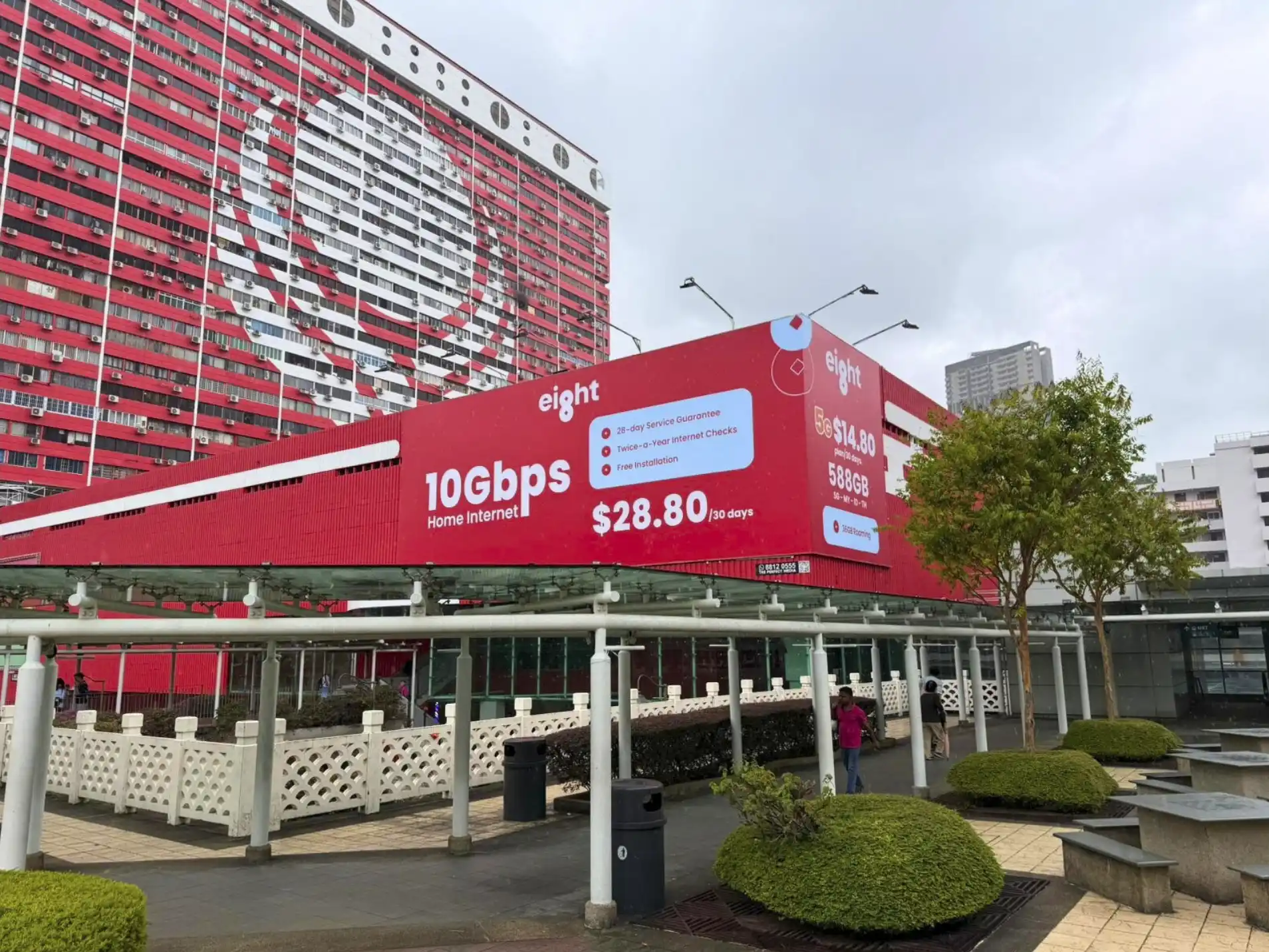
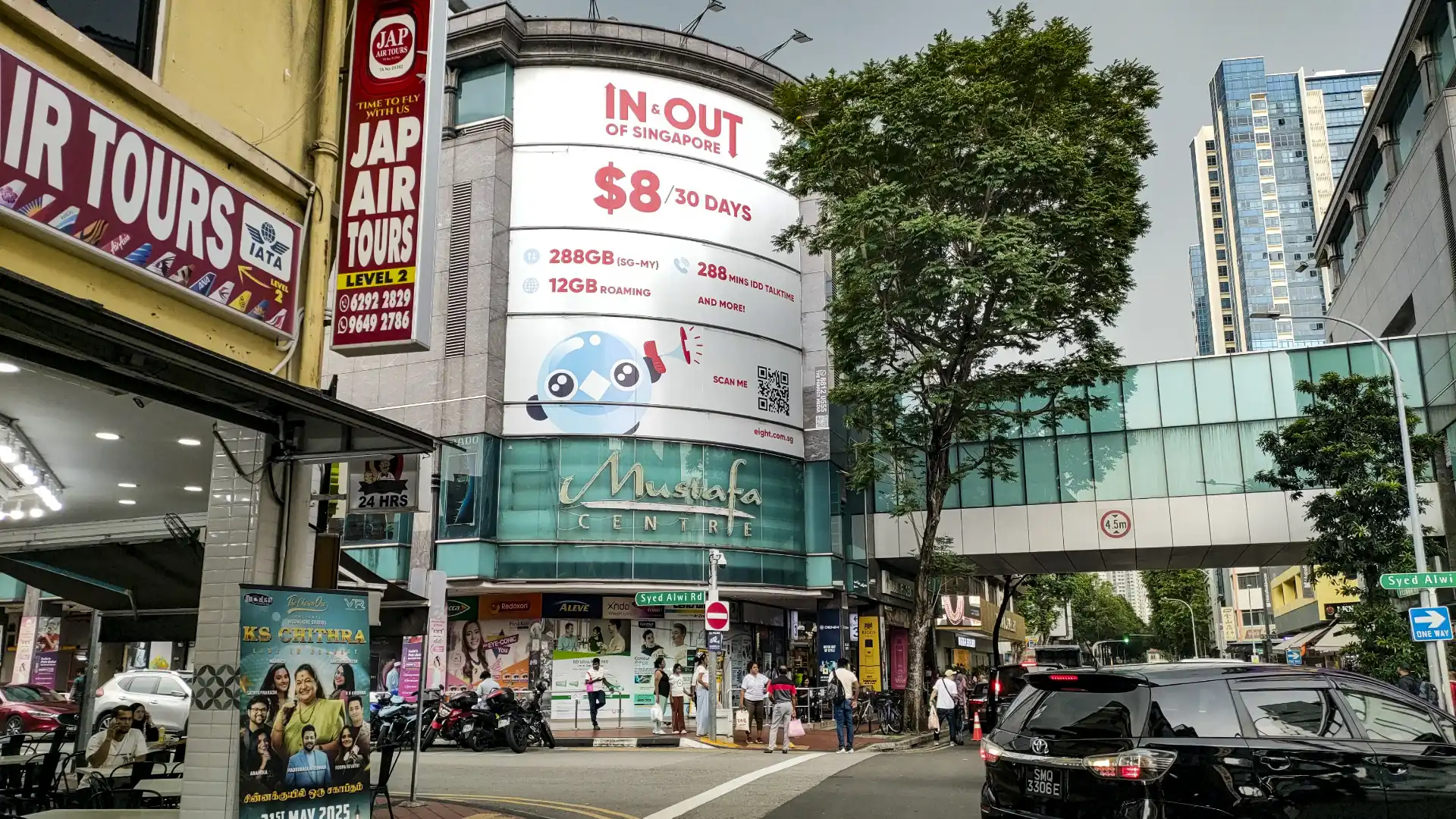
Key corridors for regional brand launches include Orchard Road for retail and lifestyle brands, the CBD for B2B and financial services, and the Chinatown and Little India precincts for campaigns targeting South Asian and Chinese diaspora communities — audiences with deep regional connections. TPM's owned media at Mustafa Grand Junction and the Chinatown Courtyard DOOH are particularly effective for these demographics.
Singapore also plays a unique role as a gateway. International travellers, regional business visitors, and transit passengers all pass through — making airport and ferry terminal media valuable for campaigns that extend beyond Singapore's resident population. TPM operates media at both Harbourfront and Batam Centre Ferry Terminals, capturing cross-border traffic between Singapore and Indonesia's Riau Islands.
Indonesia: Scale, Complexity, and Airport Access
Indonesia is Southeast Asia's largest market by population — over 280 million people across an archipelago of 17,000 islands. For OOH advertisers, this creates extraordinary reach potential but also genuine logistical complexity. Permits are issued city by city, not nationally, and billboard zoning regulations in Jakarta are among the strictest in the region following major clean-up efforts in prior years.
For airport campaigns specifically, Indonesia is a market where having direct relationships matters enormously. TPM holds direct relationships with PT Angkasa Pura I and PT Angkasa Pura II — the two state airport operators managing airports across Indonesia — which means campaign briefs are executed faster and without the additional cost layer or communication delay of sub-resellers. This is a meaningful operational advantage for regional campaigns on a timeline.
Outside Jakarta, cities like Surabaya, Medan, and Bali represent high-value OOH opportunities for brands targeting Indonesia's growing middle class. Bali, in particular, attracts both domestic and international audiences — making it a strong secondary market for travel, hospitality, and lifestyle brands running regional campaigns.
TPM offers end-to-end multi-market OOH strategy, from location selection and permit management to creative production and campaign monitoring across 20 cities in 12 countries.
Plan Your SEA OOH Campaign with TPM
Vietnam: High-Growth, High-Regulation
Vietnam has emerged as one of the most dynamic OOH markets in Southeast Asia, driven by rapid urbanisation, a young population skewing heavily urban, and increasing advertiser confidence in Ho Chi Minh City and Hanoi. Digital screen penetration is rising fast in HCMC's central districts, and building wrap formats remain high-impact in the city's dense commercial corridors.
Regulatory compliance is non-negotiable in Vietnam. Outdoor advertising requires Ministry of Culture, Sports and Tourism approval at the national level, alongside municipal permits for specific locations. Creative content — particularly for foreign brands — must be reviewed for compliance before any installation. Campaigns typically require longer lead times than in Singapore or Malaysia, and working with a partner that has established local operations is strongly advisable.
TPM's Vietnam subsidiary provides on-the-ground campaign management, which significantly reduces the permit and logistics friction that often delays regional campaigns at this particular market.
Myanmar: Ground-Level Intelligence Is Everything
Myanmar's OOH market is centred on Yangon, where roadside billboards, building facades, and a growing number of LED screens serve a predominantly urban audience. The market requires nuanced local knowledge — both in terms of the regulatory landscape and the cultural context in which creative executes.
TPM has maintained a Yangon subsidiary for several years, which means clients benefit from direct local relationships with landlords, permit authorities, and installation teams — rather than operating through intermediaries who may not fully understand the on-ground environment.
Philippines and Malaysia: Complementary Strengths
The Philippines offers one of the region's most dramatic OOH corridors in EDSA — Metro Manila's main arterial highway, where large-format billboards reach millions of commuters daily. Mall media is also exceptionally strong, given the central role of shopping malls in Filipino social and commercial life. For brands running regional campaigns, Manila is a natural inclusion for consumer goods, financial services, and technology brands.
Malaysia's OOH market is characterised by strong highway and transit formats, with KL's LRT and MRT networks offering transit media opportunities to complement roadside and digital placements. The Johor Bahru corridor is particularly interesting for campaigns that straddle the Singapore-Malaysia land border — a high-traffic zone with significant cross-border consumer movement.
The Critical Campaign Planning Considerations
For media planners managing multi-market OOH in SEA, the most common failure points are not creative — they are operational. Here are the considerations that determine whether a regional campaign runs smoothly or stalls:
- Lead times vary dramatically by market. Singapore can move quickly; Vietnam and Indonesia require longer permit timelines. A regional campaign should be scoped with the slowest market's lead time as the baseline.
- Creative adaptation is not optional. Language, cultural references, and visual conventions differ across markets. A single creative asset will not perform equally in Singapore, Yangon, and Manila without localisation.
- Permit responsibility must be clearly assigned. In markets where city-level or ministry-level permits are required, it must be explicit who owns this process — the agency, the media owner, or the advertiser. Ambiguity here causes delays.
- Format availability differs by city. DOOH penetration is high in Singapore and KL; lower in Yangon and secondary Indonesian cities. Static formats remain dominant in many tier-2 markets and should not be treated as a fallback — they are often the primary high-reach format in those environments.
- Post-campaign monitoring needs a regional framework. Proof of posting, photo verification, and campaign compliance reporting should be standardised across markets — not left to each local vendor to report in different formats at different intervals.
How a Regional Partner Changes the Equation
The difference between running a multi-market OOH campaign through a patchwork of local vendors and running it through a single regional partner is not merely one of convenience — it fundamentally changes what is achievable. A regional partner with owned inventory, local subsidiaries, and established regulatory relationships can compress timelines, ensure creative consistency, and provide unified campaign reporting that gives brand and media teams a single view of performance across markets.
TPM's network spans 300+ media spaces across 20 cities in 12 countries, with owned inventory in Singapore, direct airport access in Indonesia, and active subsidiaries in Vietnam and Myanmar. For regional campaigns that need to move quickly and execute consistently, this infrastructure is the operational foundation that makes it possible. Clients like Traveloka have leveraged this regional reach to build coordinated brand presence across multiple SEA markets simultaneously — achieving the kind of consistent visual dominance that fragmented vendor relationships rarely deliver.
For brands exploring OOH media across the region for the first time, or for established advertisers looking to increase efficiency and reduce operational friction on existing campaigns, the starting point is always the same: a proper market-by-market brief, built around real audience data, realistic lead times, and a clear view of which formats are actually available in which cities.
Starting Your Multi-Market OOH Brief
The most effective multi-market OOH campaigns start not with a map of billboard locations, but with a clear set of audience questions: Who are we trying to reach in each market? Where do they physically move through the city? What moments in their day are we targeting — morning commute, weekend retail, business travel? The answers to these questions determine the format mix, location strategy, and ultimately the ROI of the campaign.
Southeast Asia rewards advertisers who do this preparation seriously. The markets are large, the audiences are growing in purchasing power, and OOH remains one of the few media formats that cannot be filtered out of the consumer's environment. The brands that get the most from regional OOH investment are those that combine genuine local market intelligence with the operational infrastructure to execute across borders without friction.
TPM brings owned inventory, local subsidiaries, and direct media relationships across 12 countries — giving regional advertisers a single, accountable partner for campaigns that span Singapore, Indonesia, Vietnam, Myanmar, and beyond.
Plan Your SEA OOH Campaign with TPM