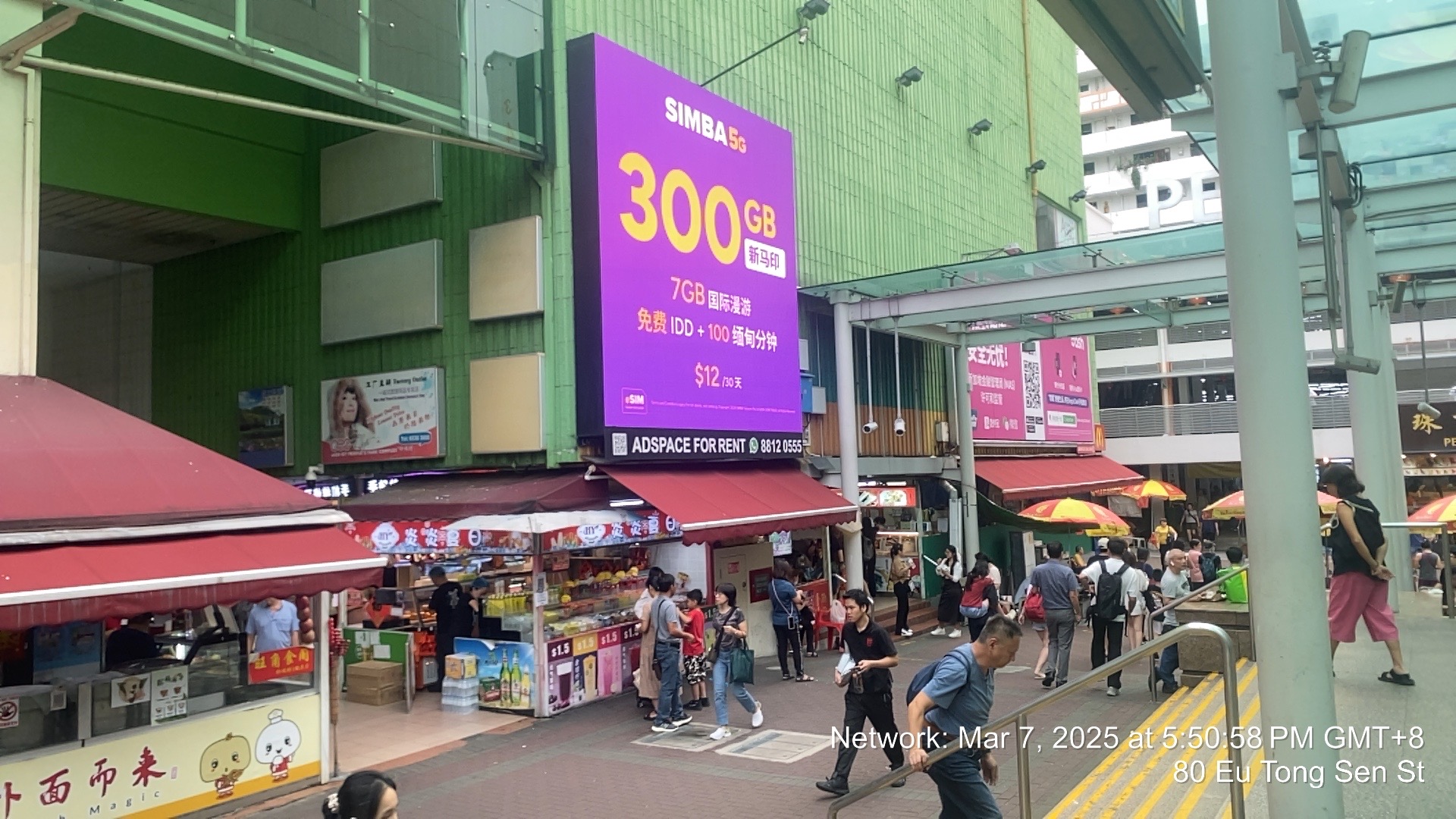
Running OOH across multiple ASEAN markets simultaneously requires more than buying billboard space — it demands local knowledge, format expertise, and a regional partner who can execute on the ground. Here's what brand and media planners need to know.
Expanding your brand's visibility across Southeast Asia is one of the most powerful moves a regional marketing team can make — but coordinating out-of-home advertising across five, eight, or ten different ASEAN markets at the same time is a fundamentally different challenge from running a single-country campaign. Audiences differ. Regulations differ. Format availability differs. And the gap between what a media vendor promises and what actually goes up on the street can be significant.
This guide is written for brand directors, regional marketing managers, and media planners who are either planning their first multi-market OOH push or looking to bring more strategic discipline to an existing regional programme. We'll walk through the core planning considerations market by market, flag the regulatory and logistical traps that catch even experienced teams, and show how a full-service regional partner changes the equation entirely.
Why ASEAN Multi-Market OOH Is Different from Global Campaigns
In mature Western markets, OOH planning is relatively standardised. You brief an agency, they access a consolidated inventory platform, and you buy across a network with consistent measurement standards. ASEAN is categorically different. Each market has its own media ownership structure, its own approval and permit timelines, its own dominant formats, and its own unwritten rules about what creative works in situ.
Consider just a few of the structural differences a regional planner must navigate:
- Singapore has a highly regulated, permit-driven OOH landscape managed through the Urban Redevelopment Authority (URA) and Land Transport Authority (LTA), with strict controls on digital-to-static ratios and illumination hours.
- Indonesia requires municipal-level permits (REKLAME permits) that vary by city — what is approved in Jakarta may need an entirely different process in Surabaya or Bali. Airport advertising at major Indonesian airports operates under concession agreements managed through PT Angkasa Pura I and II.
- Vietnam imposes restrictions on outdoor advertising content involving foreign brands or political symbolism, and permit timelines in Ho Chi Minh City versus Hanoi can vary by weeks.
- Myanmar has a rapidly evolving regulatory environment and a predominantly static OOH market, where creative adaptation for local audiences is especially critical.
- Philippines operates largely through LGU (Local Government Unit) permits, meaning a Manila campaign may require coordination across multiple barangay-level approvals for premium corridor coverage.
The bottom line: a media plan that looks clean on a spreadsheet can collapse quickly without on-the-ground regulatory intelligence and established vendor relationships in each market.
Key ASEAN Markets: OOH Format Landscape at a Glance
The table below summarises the dominant OOH formats, digital maturity, and key planning considerations across the six priority ASEAN markets for most regional campaigns:
| Market | Dominant OOH Formats | Digital OOH Maturity | Key Audience Corridors | Avg. Permit Lead Time |
|---|---|---|---|---|
| Singapore | Digital billboards, transit, MRT station panels | High — widespread DOOH across prime locations | Orchard Road, CBD, Marina Bay, Jurong East | 2–4 weeks |
| Indonesia | Large-format static billboards, LED screens, airport media | Medium — growing in Jakarta, Bali, Surabaya | Sudirman–Thamrin (Jakarta), Ngurah Rai (Bali), Juanda (Surabaya) | 4–8 weeks (city-level) |
| Vietnam | Static billboards, LED walls, street-level panels | Medium-Low — DOOH growing in HCMC | District 1 (HCMC), Hoan Kiem (Hanoi), Tan Son Nhat Airport | 3–6 weeks |
| Thailand | Static and digital billboards, transit (BTS/MRT), mall media | High — Bangkok among most active DOOH markets in SEA | Sukhumvit, Silom, Asok, Siam, Don Mueang/Suvarnabhumi corridors | 2–5 weeks |
| Malaysia | Large-format billboards, LED, transit (LRT/MRT) | Medium-High — Kuala Lumpur well-served with DOOH | KLCC, Bukit Bintang, Federal Highway, Petaling Jaya | 3–5 weeks |
| Philippines | Static large-format, LED boards, mall atrium screens | Medium — EDSA corridor and key malls drive DOOH growth | EDSA, BGC (Taguig), Makati CBD, Cebu IT Park | 4–8 weeks (LGU-dependent) |
Understanding this landscape is step one. The harder step is translating this into a coordinated media plan that goes live simultaneously — or in a strategically sequenced rollout — across multiple markets.
The Four Planning Pillars for ASEAN Multi-Market OOH
1. Audience-First Market Prioritisation
Not every ASEAN market deserves equal budget allocation in every campaign. Regional brand campaigns often default to giving each market a proportional share of media spend, but a smarter approach starts with audience density analysis. Where are your highest-value consumers physically concentrated? For a financial services brand, that might be Singapore's CBD, Bangkok's Silom district, and Kuala Lumpur's KLCC corridor. For a consumer electronics brand targeting younger demographics, it may be Ho Chi Minh City's District 1 and Manila's BGC.
This audience-first lens also shapes format selection. High-dwell-time formats — such as airport media — work especially well for premium or considered-purchase brands reaching business travellers and frequent flyers across Indonesia's major hubs or Singapore's Changi ecosystem. High-frequency transit formats suit mass market FMCG pushes across Bangkok or KL's commuter corridors.
2. Creative Strategy: One Campaign, Multiple Executions
One of the most common and costly mistakes in ASEAN multi-market OOH is treating creative as a single asset to be reproduced at scale. A campaign visual developed in Singapore may carry connotations, colour associations, or messaging hierarchies that don't translate to Indonesian or Vietnamese audiences. At a practical level, copy that reads clearly on a 6x3m portrait billboard in Singapore may be illegible on a large-format 15x5m horizontal roadside structure in Jakarta.
Best-practice regional campaigns establish a master creative framework — core visual identity, campaign promise, key visual — and then localise execution by market. This includes:
- Language adaptation (not just translation — tone and register vary significantly between formal Bahasa Indonesia, colloquial Bahasa Melayu, and Vietnamese)
- Format-specific artwork resizes for each country's dominant structures
- Regulatory compliance checks on imagery, claims, and brand mark usage for each market
- Visibility testing for ambient light conditions — what pops in Singapore's controlled urban environment may wash out in the high-daylight conditions of Bali or Manila
TPM offers end-to-end regional OOH strategy, from market prioritisation and format planning to creative localisation and live campaign monitoring across 20 cities in 12 countries.
Plan Your SEA OOH Campaign with TPM
3. Permit and Procurement Timelines: Build the Buffer
Regional campaigns frequently miss their go-live windows because media planning timelines are benchmarked against Singapore's relatively efficient approval environment and then applied uniformly across the region. This is a systematic planning error.
Indonesia's REKLAME permit system requires municipal-level approvals, and popular locations in Jakarta's Sudirman–Thamrin corridor can have booking queues of 8–12 weeks for premium sites. Vietnam's permit process for foreign brand advertising involves content review at both provincial and national levels in some categories. Philippines LGU permits are hyperlocal and can be unpredictably slow.
A realistic regional OOH timeline for a campaign targeting six ASEAN markets simultaneously should build in:
- 12–14 weeks from brief to live in Indonesia and Philippines (for large-format, multi-city buys)
- 8–10 weeks in Vietnam and Malaysia
- 6–8 weeks in Thailand and Singapore
- A 2-week creative buffer for localisation, artwork approvals, and production across all markets
Agencies and media owners with established in-market relationships — and in some cases, direct concession agreements — can materially compress these timelines. TPM's direct relationship with PT Angkasa Pura I & II, for example, removes the reseller layer entirely for Indonesian airport inventory, meaning faster booking confirmation and more reliable go-live dates for brands targeting travellers at Jakarta's Soekarno-Hatta, Bali's Ngurah Rai, or Surabaya's Juanda airports.
4. Measurement and Post-Campaign Reporting
OOH measurement in ASEAN is improving but remains inconsistent across markets. Singapore has relatively robust audience measurement through third-party panels and operator-provided traffic data. Indonesia and Vietnam rely more heavily on operator-supplied estimates and periodic independent audience surveys. Thailand's Bangkok market has benefited from transit operator ridership data feeding into OOH planning tools.
For multi-market campaigns, the pragmatic approach is to define a core set of reporting metrics that can be collected consistently across all markets — typically:
- Confirmed installation photos and coordinates across all sites
- Estimated gross impressions based on operator traffic data or independent counts
- Share of voice at key corridors (where measurable)
- Brand recall or awareness lift (where research budget permits post-campaign survey)
Digital OOH formats offer more reliable measurement through play-count logs and — in some markets — programmatic DOOH platforms that provide verified impression delivery. As digital OOH infrastructure continues to mature across the region, this data gap between markets will narrow over the next three to five years.
Singapore as the Regional OOH Anchor
For most ASEAN regional campaigns, Singapore plays a disproportionately important role — not just because of its own market value, but because of its function as a regional business hub. The audience exposed to premium Singapore OOH includes not only local consumers but visiting regional buyers, business travellers transiting through Changi, and expatriate professionals who carry brand impressions back to their home markets.
TPM's owned inventory across Singapore's highest-traffic corridors makes it possible to build a strong anchor presence here while simultaneously coordinating regional extensions. The Mustafa Grand Junction DOOH screen, for instance, reaches one of Singapore's most ethnically diverse and commercially active neighbourhoods — a meaningful proxy audience for South Asian and Southeast Asian consumer segments. Similarly, the Orchard Flagship DOOH delivers premium brand exposure at the heart of Singapore's retail and tourist corridor, capturing both local shoppers and inbound visitors from across the region.
Brands like Traveloka, Grab, and Singtel have leveraged Singapore's OOH infrastructure as part of broader regional brand-building — using high-impact Singapore placements to signal regional ambition and reinforce campaigns running simultaneously in Jakarta, Kuala Lumpur, and beyond.
How a Regional OOH Partner Changes the Equation
There is a meaningful difference between engaging a media reseller in each market and working with a regional partner that has genuine owned inventory, established regulatory relationships, and full-service creative capabilities across the ASEAN footprint.
With reseller-based approaches, brands often encounter:
- Margin stacking that inflates effective CPMs without adding strategic value
- Inconsistent quality control across markets (site verification, posting standards, maintenance)
- Fragmented reporting with no consolidated view of regional performance
- Creative produced to minimum specifications rather than optimised for each format and market
A full-service regional partner consolidates brief, strategy, procurement, creative localisation, and reporting into a single accountable relationship — which is particularly valuable when campaigns span five or more markets with simultaneous go-live requirements.
TPM operates across 20 cities in 12 countries with subsidiaries in Indonesia, Myanmar, and Vietnam, and affiliate relationships extending across the Philippines and South Asia. This isn't a reseller network — it's a regional infrastructure built over more than two decades of in-market presence. Whether you're planning a six-market ASEAN launch or a targeted three-city regional brand push, the ability to brief once and execute across the region with a single point of accountability is a material operational advantage.
Quick Reference: ASEAN Multi-Market OOH Planning Checklist
- Define your audience corridors first — which cities and micro-locations carry your highest-value consumer density?
- Map format availability by market — don't assume DOOH availability mirrors Singapore or Bangkok in every city
- Build regulatory timelines into the brief — 12–14 weeks for Indonesia and Philippines; 6–8 weeks for Singapore and Thailand
- Commission market-specific creative adaptations — not just resizes, but genuine local creative reviews
- Confirm direct inventory access — understand whether your media partner owns the space or is reselling it
- Set a consistent measurement framework — agree on deliverables before booking, not after the campaign ends
- Plan for a Singapore anchor — use Singapore's premium OOH environment to signal regional brand stature
From Jakarta airports to Singapore's Orchard Road, TPM delivers end-to-end OOH campaign execution across 20 cities with owned inventory, direct relationships, and no reseller markups.
Plan Your SEA OOH Campaign with TPM