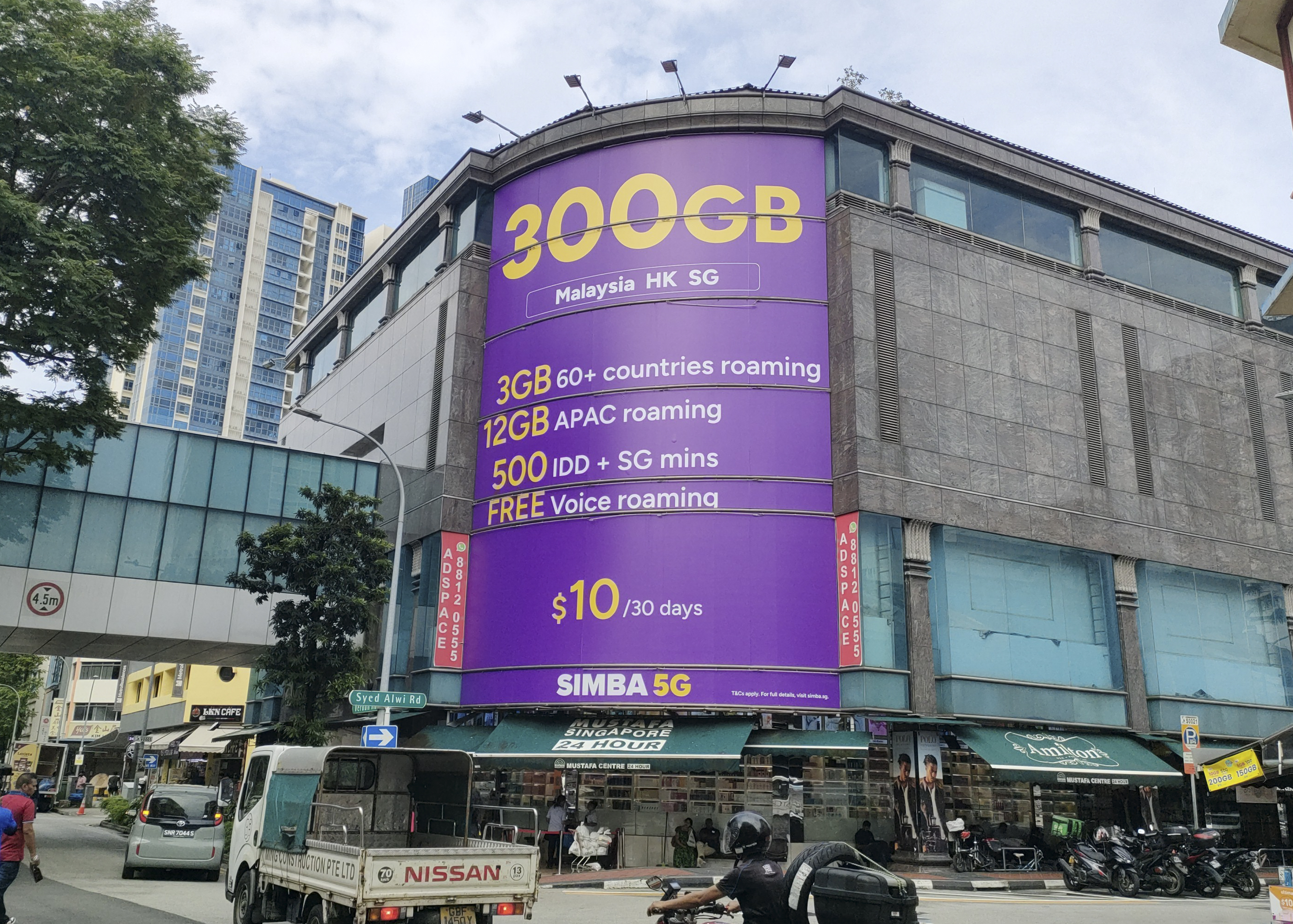
Measuring OOH advertising ROI goes beyond impressions. Discover the frameworks, metrics, and tools brand managers in Singapore and Southeast Asia can use to prove the real impact of outdoor campaigns.
Every marketing manager has faced the same boardroom question: "We spent on billboards last quarter — but what did we actually get from it?" It's a fair challenge. Unlike paid search or social media, out-of-home advertising doesn't come with a native analytics dashboard. There's no click-through rate, no conversion pixel, no last-touch attribution model sitting neatly in a spreadsheet.
But here's the reality: the absence of easy tracking doesn't mean OOH is unmeasurable. It means you need to measure it more intelligently. Brands that understand how to evaluate outdoor media — properly — consistently find it one of the most cost-efficient channels in their mix, particularly for building brand awareness and reducing customer acquisition cost (CAC) at scale.
This guide walks through the practical frameworks, metrics, and tools that brand managers in Singapore and Southeast Asia can use to measure the genuine business impact of an OOH advertising campaign.
Why OOH Measurement Has Historically Been Misunderstood
The challenge with measuring OOH isn't a lack of data — it's a lack of the right data, connected to the right business outcomes. For decades, outdoor advertising was evaluated almost entirely on one metric: estimated impressions. While impressions remain a useful baseline, they tell you nothing about brand recall, consideration lift, foot traffic change, or downstream conversions.
The good news is that measurement technology has matured significantly. Mobile location data, anonymised device-level movement analytics, brand lift studies, and social listening tools now allow marketers to build a far richer picture of what an OOH campaign actually does for a brand — not just how many eyeballs theoretically passed a site.
The Core Metrics That Actually Matter
1. Reach and Frequency (But Done Properly)
Reach — the number of unique individuals exposed to your OOH creative — and frequency — how many times they see it — remain foundational. But the quality of reach matters enormously. A billboard on a quiet industrial road delivering 50,000 weekly impressions is not equivalent to a high-dwell, pedestrian-facing site in a dense urban area delivering the same number.
When evaluating sites, ask your OOH partner for audience composition data, not just raw traffic counts. Who is passing that screen — their age, income band, purchase behaviours? A Little India Spotlight format in Singapore, for instance, delivers consistent exposure to a highly specific demographic: South Asian residents, tourists, and the surrounding commercial community — invaluable for brands targeting that segment.
2. Brand Awareness and Recall Lift
Pre- and post-campaign brand lift studies remain the gold standard for measuring awareness impact. These involve surveying a representative sample of your target audience before the campaign launches and again after it concludes, asking unaided and aided brand recall questions, as well as consideration and preference metrics.
For Singapore-based campaigns, this is increasingly accessible through third-party research providers and digital survey panels. A well-designed lift study can isolate the OOH contribution even when running a multi-channel campaign — by comparing recall among respondents who were in-market (geographically exposed to OOH sites) versus those who were not.
3. Foot Traffic Attribution
Mobile location data has transformed foot traffic measurement. By partnering with a data provider that uses anonymised device movement data, brands can compare store visit rates among devices that were exposed to specific OOH locations versus a control group that was not. This is particularly powerful for retail, F&B, and service brands with physical locations.
For example, a quick-service restaurant running a campaign across multiple Singapore OOH sites can measure whether footfall to nearby outlets increased among device audiences exposed to those locations — and calculate a cost-per-incremental-visit figure that feeds directly into CAC calculations.
4. Online Search and Social Lift
OOH creates offline-to-online behaviour. A consumer who sees a compelling billboard on their commute will frequently search for the brand, visit the website, or engage on social media later in the day. Monitoring branded search volume (Google Search Console, Google Trends) and direct traffic spikes during and immediately after a campaign flight is a practical proxy for OOH-driven interest.
Social listening — tracking brand mentions, hashtags, and user-generated content associated with the campaign — adds another layer, particularly for high-impact creative executions that generate organic sharing.
5. Customer Acquisition Cost (CAC) Contribution
OOH's contribution to CAC is best understood through a multi-touch attribution model. While OOH rarely delivers the final conversion touch, it meaningfully reduces the number of paid digital impressions required to move a prospect through the funnel. Brands that run concurrent OOH and digital campaigns consistently report lower CAC on their digital channels — because OOH has already done the heavy lifting of awareness and consideration.
Measuring this requires a disciplined approach: hold out markets, geo-based split testing, or media mix modelling (MMM) to isolate OOH's contribution to overall acquisition efficiency.
TPM's strategists work with brands to define the right measurement framework before a campaign launches — ensuring you have the data infrastructure to prove OOH's impact.
Talk to a TPM Strategist
A Practical Measurement Framework for OOH Campaigns
Before your campaign goes live, align on a measurement plan that maps each business objective to a specific metric and data source. The table below outlines a practical framework:
| Campaign Objective | Primary Metric | Measurement Method | Typical Benchmark (SG/SEA) |
|---|---|---|---|
| Build brand awareness | Unaided recall lift | Brand lift study (pre/post survey) | +8–15% lift over control |
| Drive consideration | Aided awareness + intent scores | Brand lift study, consumer panel | +10–20% consideration lift |
| Increase foot traffic | Incremental store visits | Mobile location data (exposed vs control) | +5–15% uplift in exposed group |
| Support digital performance | Branded search volume, direct traffic | Google Trends, GA4, Search Console | +10–25% branded search lift |
| Reduce CAC | Digital CAC in OOH-exposed markets | Media mix modelling, geo hold-out test | 10–30% CAC reduction vs non-OOH markets |
| Reach specific audience segment | Audience composition index | Site audience data, panel research | Varies by site and segment |
The key discipline here is establishing baselines before the campaign. Measurement without a baseline is just noise. Ensure your digital analytics are properly configured, your brand lift survey is fielded in advance, and any foot traffic measurement SDK is active before launch.
Real-World Application: A Hypothetical Singapore Launch Campaign

Consider a fintech brand launching a remittance product targeting the South Asian migrant worker and professional community in Singapore. Their primary KPIs are: (1) unaided brand awareness among the target segment, (2) app download volume, and (3) CAC relative to their existing digital-only baseline.
Rather than buying broad-reach OOH indiscriminately, they deploy a concentrated strategy: high-frequency exposure at sites with documented audience overlap with their target demographic, including locations in Little India and surrounding areas with strong South Asian foot traffic patterns.
Their measurement plan runs on three tracks simultaneously:
- Brand lift study: A panel of 500 South Asian residents in Singapore is surveyed on brand awareness and intent before and after the four-week campaign flight.
- App attribution: UTM-tagged QR codes on OOH creatives allow direct attribution of app downloads sourced from OOH exposure — accounting for a meaningful share of total downloads during the campaign window.
- Digital channel monitoring: The team tracks branded search volume and direct traffic daily throughout the campaign, noting a consistent 18% uplift in organic branded searches during active OOH weeks.
The outcome: a measurable 12% unaided recall lift among the target segment, a 22% reduction in blended digital CAC compared to the pre-OOH baseline, and clear evidence that OOH is functioning as a powerful funnel primer — not a standalone vanity spend. This approach mirrors how TPM has supported campaigns for clients like NPCI, where precise audience targeting and measurable outcomes were central to campaign strategy.
The Role of DOOH in Improving Measurability
Digital out-of-home (DOOH) formats have significantly improved the measurement landscape. Unlike static formats, digital OOH placements offer campaign managers real-time proof-of-play reporting, audience index data by time of day, and the ability to run A/B creative tests across different screens — measuring differential recall or engagement by creative variant.
DOOH also enables dynamic content strategies that can be tied to measurable triggers: weather conditions, time of day, local events, or even real-time data feeds. This means the relationship between stimulus (the ad) and response (consumer behaviour) becomes far easier to trace and optimise mid-campaign, rather than waiting for a post-campaign report.
Common Measurement Mistakes to Avoid
- Measuring OOH in isolation: OOH's greatest impact is often amplifying other channels. Always evaluate it within the context of your full media mix, not as a standalone channel with sole responsibility for conversion.
- Using only impressions as the KPI: Raw impression counts without audience quality data, dwell time consideration, or recall lift tell you very little about actual impact.
- Setting measurement up after the campaign launches: Baseline data, survey panels, and analytics configurations must be in place before day one. Retroactive measurement is unreliable.
- Ignoring the lagged effect: OOH brand-building effects often materialise two to four weeks after campaign exposure. Cutting measurement windows too short will systematically undercount OOH's contribution.
- Overlooking qualitative signals: Sales team feedback, customer service inquiry patterns, and partner sentiment can all serve as qualitative indicators of OOH effectiveness — especially for B2B or high-consideration categories.
Choosing an OOH Partner That Takes Measurement Seriously
Measurement quality is, in large part, a function of who you work with. An OOH media owner that simply sells you a site and disappears gives you very little to work with. A strategic OOH partner will help you define measurable objectives at the brief stage, recommend site selections based on audience data rather than just availability, and support post-campaign analysis with the data infrastructure to back it up.
TPM approaches every campaign as a strategic exercise, not a transactional one. From the initial brief through to post-campaign monitoring, the goal is to ensure that every dollar invested in OOH can be justified with evidence — and that the insights from one campaign inform a smarter strategy for the next.
TPM helps brands across Singapore and Southeast Asia build OOH strategies with clear KPIs, the right site mix, and a measurement framework that proves real business impact.
Talk to a TPM Strategist