Crunchyroll Demon Slayer
Crunchyroll

Taking Demon Slayer From Screen to Street
Crunchyroll needed to generate broad awareness and subscription momentum for Demon Slayer in Singapore — a market where anime fandom is deep but streaming competition is fierce. Digital advertising reaches existing users but struggles to create the cultural presence that signals a major tentpole release. OOH across Singapore's anime-adjacent cultural zones gave Demon Slayer the physical scale to feel like a genuine event, not just another title drop.
Anime Culture Lives Offline Too
Singapore's anime community gathers, shops, and socialises in specific physical precincts that digital ads cannot fully penetrate. Street-level OOH meets fans in the spaces they already associate with Japanese pop culture, reinforcing Crunchyroll's brand as part of that world.
Visual Franchises Demand Visual Scale
Demon Slayer's art direction is among the most striking in contemporary anime — Trivision rotation and large LED screens give the creative the physical canvas it deserves. Dynamic and multi-face formats amplify character-driven key art in ways that small-screen placements cannot replicate.
Exclusive Access to Key Precincts
TPM holds exclusive licensee rights to People's Park Complex — the anchor placement that puts Demon Slayer at the centre of Chinatown's cultural footfall. Combined with TPM's direct relationships across the remaining four sites, the campaign was assembled with zero gaps in execution.
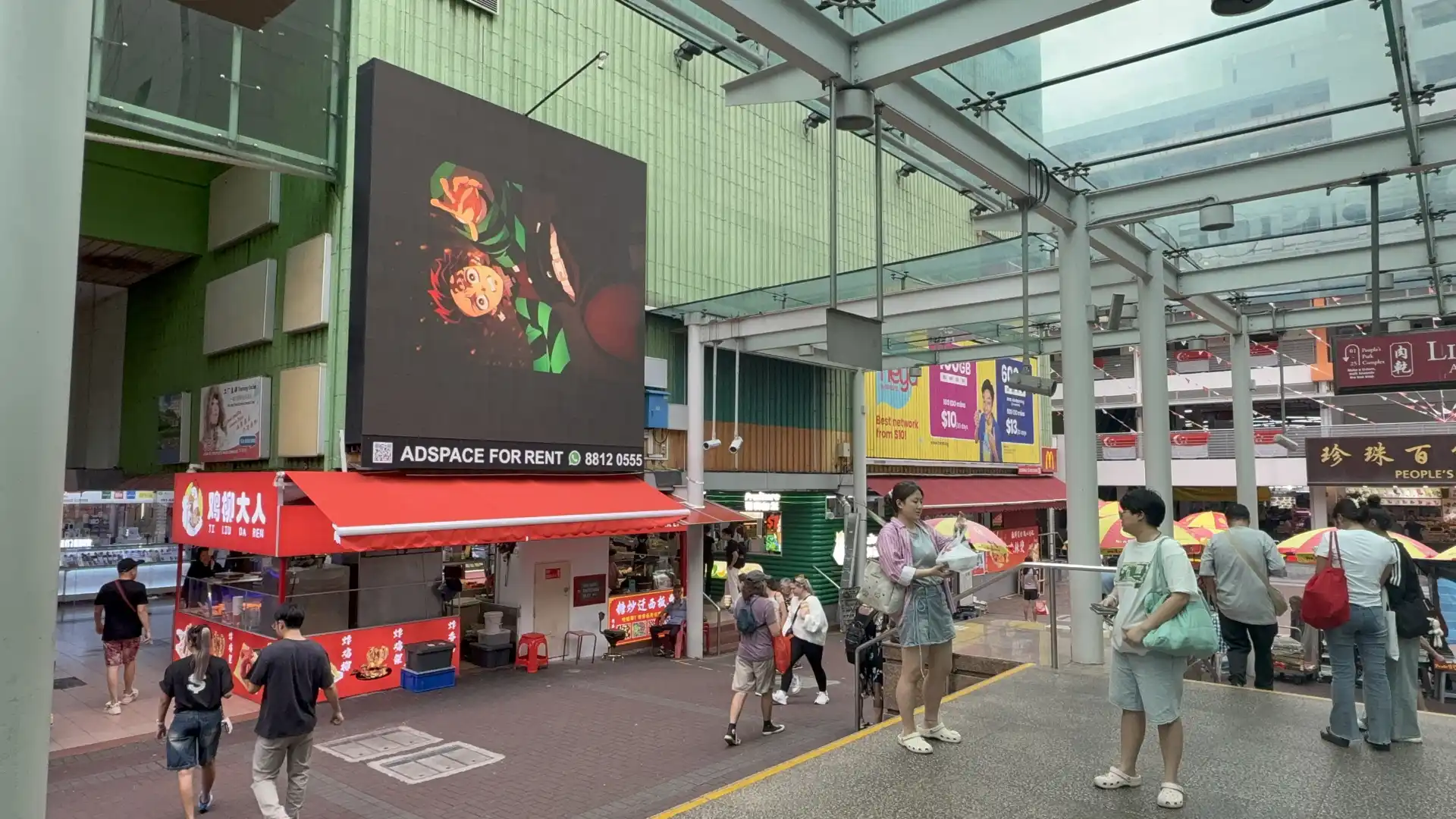
People's Park Complex Trivision
People's Park Complex sits at the heart of Chinatown, drawing a dense mix of Singaporean Chinese families, tourists, and working residents — an audience with strong affinity for Japanese pop culture and anime. The People's Park Complex Trivision delivers three alternating creative faces on a high-visibility street-level structure, maximising creative impact across repeated daily exposures. For a franchise as visually rich as Demon Slayer, the rotating format amplifies character artwork and key art in a way a static display cannot.
Alexandra Grand Junction DOOH
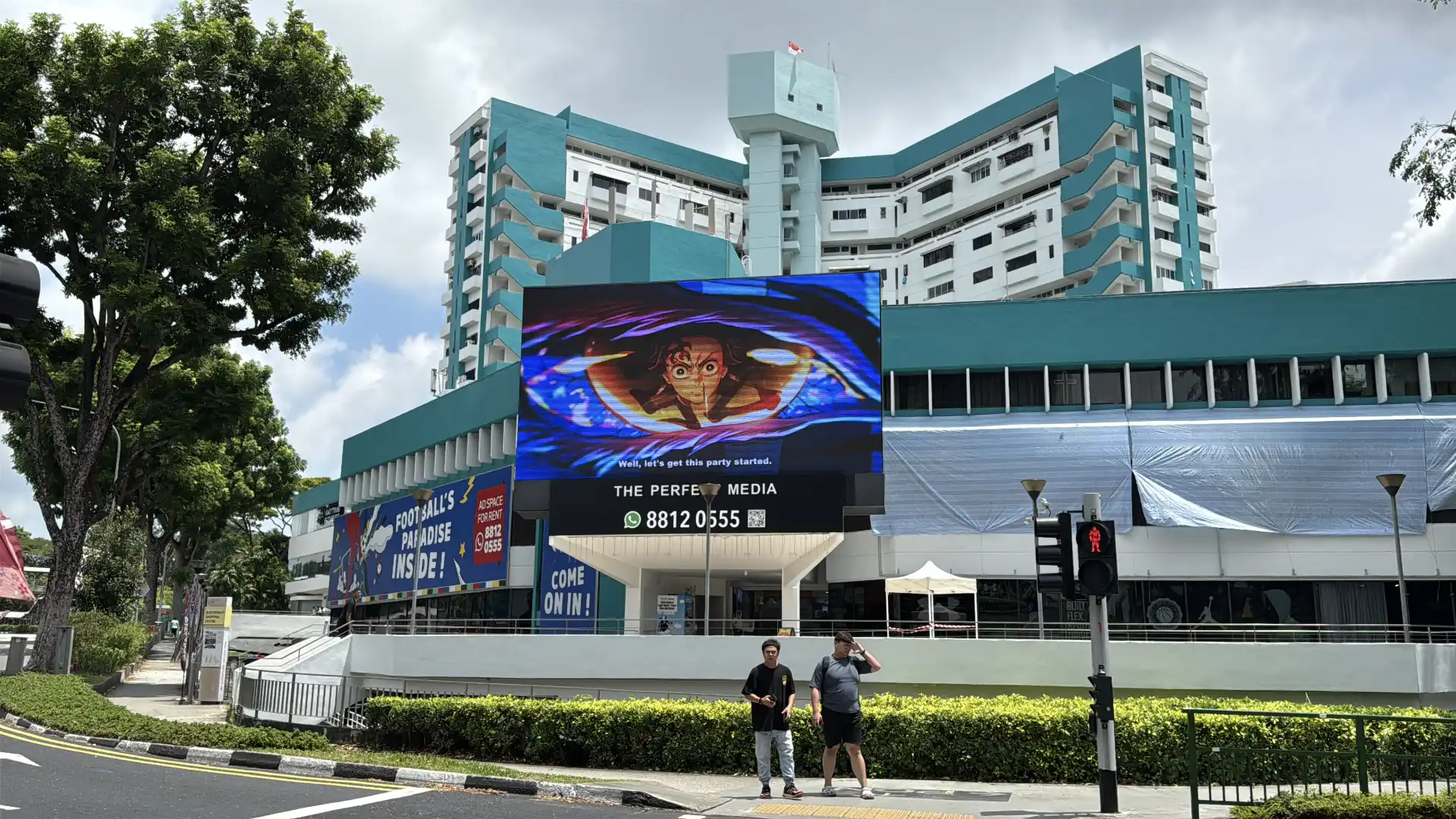
The Alexandra corridor connects residential estates with commercial hubs, generating consistent commuter traffic from younger working adults — a demographic that indexes strongly for streaming platform subscriptions and anime consumption. The Alexandra Grand Junction DOOH LED screen commands a prominent junction position, ensuring the Demon Slayer campaign creative lands with full colour fidelity and motion capability. Dynamic Digital OOH at this location allows Crunchyroll to programme time-sensitive messaging across the day, driving subscription urgency.
Chinatown point
Chinatown point is a retail and lifestyle destination attracting a younger, trend-conscious audience who actively engage with entertainment, gaming, and streaming culture. Its position within the broader Chinatown precinct reinforces Crunchyroll's presence in an area already activated by the People's Park placement, creating neighbourhood-level saturation. The shopping mall environment means extended dwell time, giving the Demon Slayer creative repeated opportunities to register with the exact audience Crunchyroll is converting.
ERA APAC Centre (Front) - LED
The ERA APAC Centre (Front) - LED faces one of Singapore's busiest arterial roads, capturing a broad cross-section of vehicular and pedestrian traffic throughout the day. Its large-format LED display is engineered for visibility at distance and speed, making it ideal for high-production-value anime key art that needs room to breathe. Placement here ensures the campaign reaches commuters and city workers well beyond the Chinatown cluster, broadening Crunchyroll's street-level footprint.
Bugis Street (Rear)
Bugis is arguably Singapore's single most concentrated zone for anime, manga, and Japanese pop culture retail — making Bugis Street (Rear) the most precisely targeted placement in the campaign. The audience walking this precinct includes dedicated collectors, convention-goers, and active streaming subscribers who represent Crunchyroll's highest-intent users. Capturing this audience in their own cultural territory transforms the Demon Slayer campaign from awareness-building into direct community engagement.
Demon Slayer Owned Singapore's Streets

5 Sites
Five distinct locations across Chinatown, Alexandra, Orchard fringe, and Bugis created overlapping audience reach with no single point of failure.
3 Formats
Trivision, LED DOOH, and retail media worked together to hit audiences across transit, commute, and leisure contexts.
Precision
Every placement was selected for its documented affinity with Singapore's anime and Japanese pop-culture audience segments.
Exclusive
TPM's exclusive Trivision at People's Park Complex placed Demon Slayer at the physical centre of Singapore's Chinatown entertainment precinct.
Crunchyroll Demon Slayer
Crunchyroll's Demon Slayer campaign activated five high-impact OOH sites across Singapore's most anime-engaged zones — from Chinatown to Bugis — spanning Trivision, large-format LED, and retail media in August 2025.
Want to plan something like Crunchyroll Demon Slayer?
Get Quote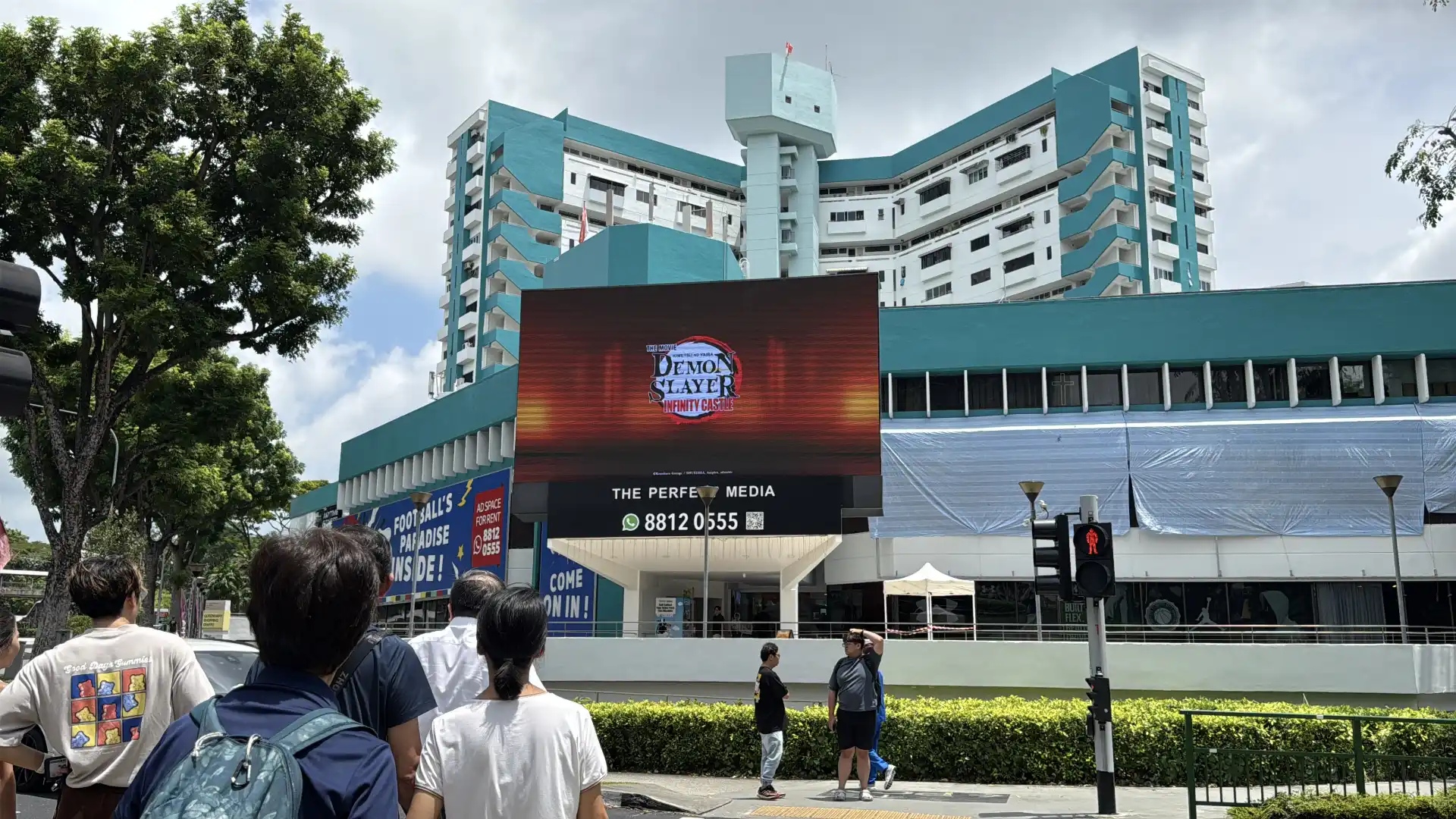
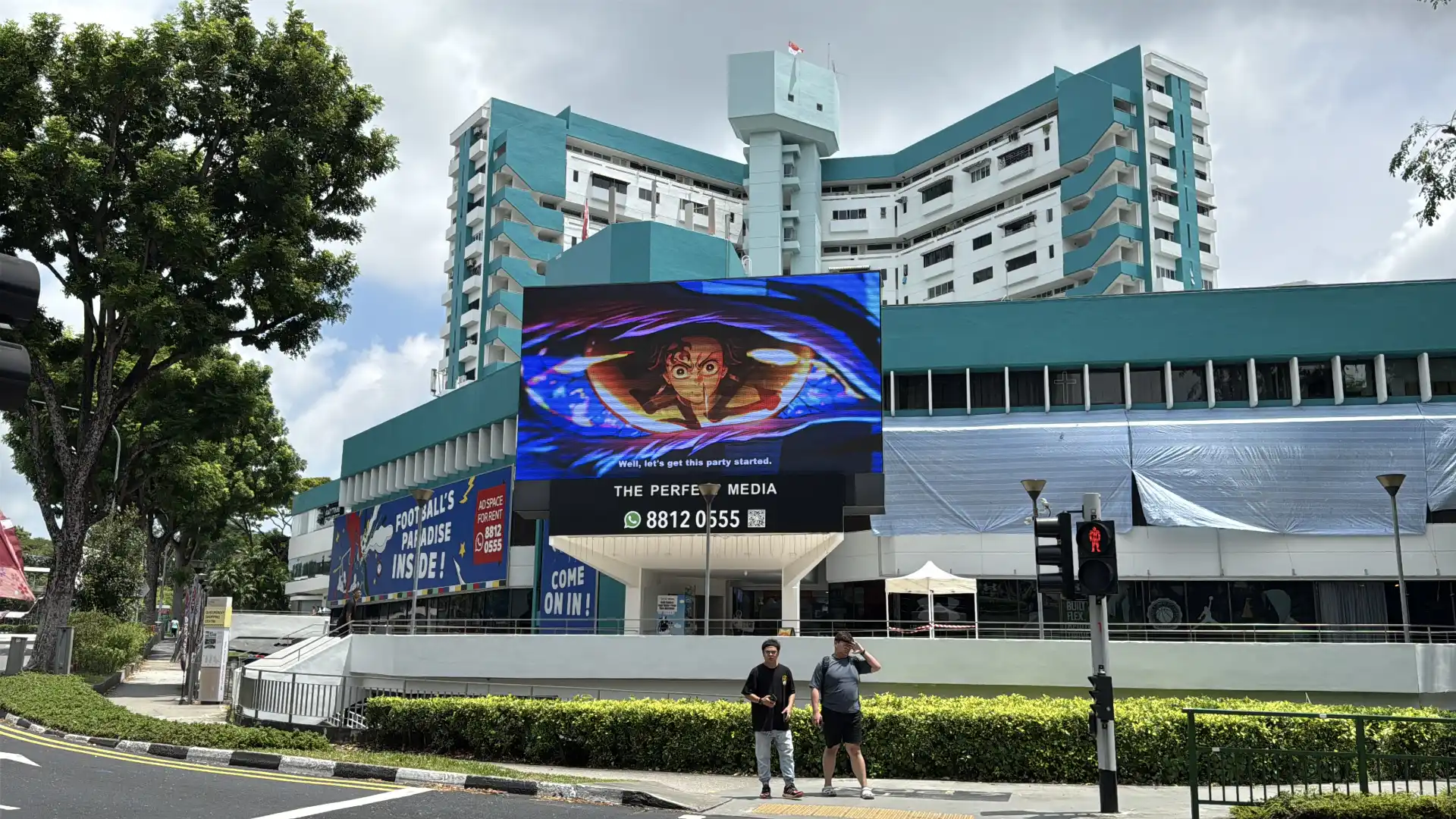
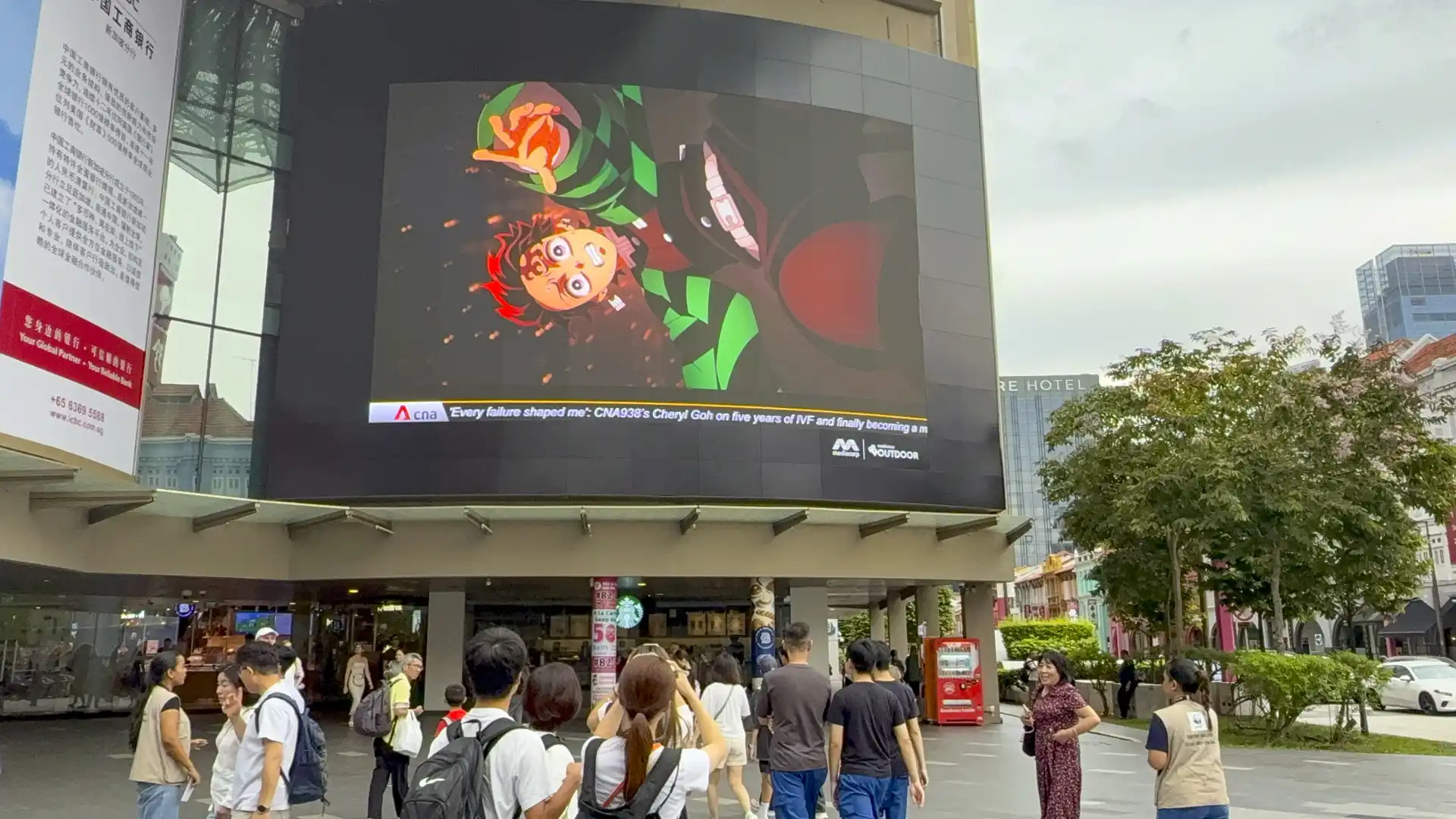
Crunchyroll activated five OOH sites across Singapore in August 2025, spanning People's Park Complex, Alexandra Grand Junction, Chinatown Point, ERA APAC Centre, and Bugis Street. Formats included Trivision display, large-format LED screens, and retail media — each selected to reach anime-engaged audiences in the physical precincts they already frequent. The campaign was managed end-to-end through Creative Out Of Home strategy, ensuring each placement reinforced the others across the city.
People's Park Complex sits within Chinatown — one of Singapore's highest-footfall precincts for entertainment-oriented consumers and a natural gathering point for the Chinese Singaporean demographic that over-indexes for anime consumption. The People's Park Complex Trivision is an exclusive TPM asset unavailable through any other OOH agency, giving Crunchyroll access to a landmark format directly in front of this audience. The three-face rotation allowed multiple Demon Slayer creative executions to run simultaneously, maximising visual variety and dwell impact.
A Trivision display is a billboard format constructed from rotating triangular prism panels, allowing three distinct creative executions to cycle on a single structure — each visible for several seconds before transitioning. For entertainment campaigns like Demon Slayer, this format is exceptionally powerful because it can showcase multiple characters, scenes, or calls to action without requiring separate placements. The mechanical movement also generates additional visual attention compared to static formats, making it difficult to ignore even for repeat passers-by.
Streaming platforms operate in a hyper-competitive digital environment where audiences are conditioned to scroll past or skip pre-roll ads — making it hard to generate genuine cultural presence online alone. OOH Media in high-footfall entertainment precincts gives a streaming brand like Crunchyroll the physical scale to signal a major release event, reaching fans at moments of leisure and community rather than passive screen time. In Singapore specifically, the concentration of anime retail, events, and community activity in precincts like Bugis and Chinatown makes OOH placements in those zones disproportionately effective for Japanese pop-culture IP.
Yes — TPM operates 30+ owned and exclusively licensed media locations across Singapore, including landmark properties such as People's Park Complex, Mustafa Centre, Queensway Shopping Centre, Hotel Boss, and Hotel 81, all of which are unavailable through any other OOH agency. This Crunchyroll campaign across five simultaneous sites is a representative example of how TPM structures multi-node campaigns to achieve city-wide saturation without media duplication. TPM's regional footprint also extends across Indonesia, Myanmar, and Vietnam, enabling cross-border campaign execution for brands with broader Southeast Asian ambitions.
Planning a regional OOH campaign?
Crunchyroll's Demon Slayer campaign activated five high-impact OOH sites across Singapore's most anime-engaged zones — from Chinatown to Bugis — spanning Trivision, large-format LED, and retail media in August 2025.