
Vietnam has become one of Southeast Asia’s fastest-growing markets for tourism, international business, manufacturing, and foreign investment. In 2025, Vietnam welcomed nearly 21.2 million international visitors, with more than 17.8 million arriving by air. This makes airports an important gateway for brands looking to reach travellers as they enter, leave and travel through Vietnam.
Vietnam has become one of Southeast Asia’s fastest-growing markets for tourism, international business, manufacturing, and foreign investment. In 2025, Vietnam welcomed nearly 21.2 million international visitors, with more than 17.8 million arriving by air. This makes airports an important gateway for brands looking to reach travellers as they enter, leave and travel through Vietnam.
Brands should use airport advertising in Vietnam to reach high-value travellers in premium environments where audiences have time to notice, engage with, and remember brand messages. Vietnam’s major airports connect brands with international tourists, domestic travellers, business professionals, and affluent consumers across key commercial and tourism destinations.
Airport advertising combines high passenger reach, audience quality, and extended dwell time across arrival halls, baggage claim areas, departure zones, and boarding areas. With airports such as Tan Son Nhat International Airport, Ho Chi Minh City, Noi Bai International Airport, Hanoi, Da Nang International Airport, Da Nang, Cam Ranh International Airport, Nha Trang and Phu Quoc International Airport, Phu Quoc serving different traveller profiles and markets. Brands can select airport media based on their target audience, campaign objectives, and geographic priorities.
Why Airports Are a High-Value Advertising Environment in Vietnam
Vietnam’s major airports serve as gateways for business travellers, tourists, investors, expatriates, and affluent consumers.
Why airport audiences matter for premium, travel, retail, and business brands
Airport audiences can be particularly valuable for brands targeting premium, travel, retail, and business audiences.
Business travellers include executives, entrepreneurs, investors, and decision-makers. International tourists are actively researching accommodation, transportation, dining, and shopping opportunities. Domestic travellers frequently represent middle- and upper-income consumers with strong purchasing power.
This audience profile makes airport advertising particularly attractive for:
- Luxury brands
- Financial services
- Telecommunications
- Tourism and hospitality
- Education providers
- Real estate developers
- Technology companies
Unlike traditional roadside advertising, airport media places brands directly in front of consumers who are already in a spending mindset.
How airport advertising supports visibility at key moments of arrival and departure
Travel creates natural moments of heightened awareness.
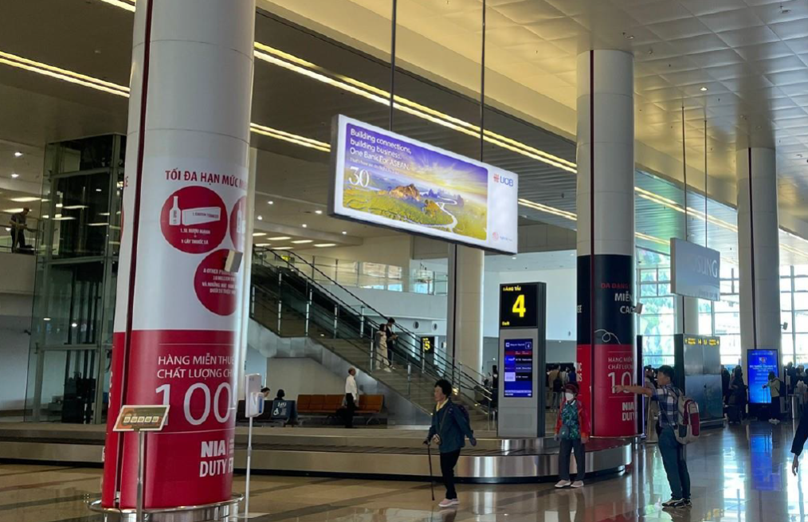
Arriving passengers are actively seeking information and services. Departing passengers often spend extended periods within airport environments before boarding.
These moments provide advertisers with opportunities to build awareness, reinforce messaging, and influence decision-making at highly relevant points in the customer journey.
Why Vietnam Airport Advertising Is More Than Just Passenger Volume
Many advertisers evaluate airports based solely on traffic numbers.
However, audience quality often matters as much as audience size.
Why audience mindset matters as much as traffic
Travellers can be highly receptive to relevant brand messages during their journey.
They are planning, researching, purchasing, and making decisions related to business activities, travel experiences, transportation, accommodation, and communication needs.
This mindset makes airport advertising particularly relevant for brands looking to build awareness and brand association among audiences with specific travel and purchasing needs.
How dwell time and repeated exposure strengthen recall in airport environments
One of the most powerful advantages of airport media is dwell time.
Passengers move through check-in zones, security screening, waiting areas, boarding gates, arrival halls, and baggage claim areas.
This creates multiple opportunities for repeated exposure throughout a single journey.
Repeated exposure can build familiarity with a brand, strengthen message recall, and keep the brand visible at different stages of the passenger journey.
Which Types of Brands Benefit Most from Airport Advertising in Vietnam
Airport advertising is not equally relevant for every industry. However, several categories can benefit from the airport media environment, particularly brands targeting travellers, professionals, affluent consumers, and international audiences.
Why luxury, travel, hospitality, education, finance, and telecom brands fit naturally
Luxury brands use airports to reinforce premium positioning.
Travel and hospitality companies engage consumers when travel planning is already top of mind.
Financial institutions can use airports to reach professionals, investors, and internationally mobile audiences.
Telecommunications providers connect with travellers who may require connectivity solutions upon arrival.
Education providers can gain visibility among international students, parents, and globally mobile audiences.
These categories align naturally with airport traveller profiles, travel-related needs, and purchasing decisions.
When airport advertising works better than generic city-centre OOH
Traditional city-centre OOH can deliver broad reach, but airport media can be particularly valuable when advertisers need to reach a more specific traveller audience.
Airport media becomes particularly relevant when advertisers need to reach:
- International travellers
- Frequent flyers
- Corporate decision-makers
- Investors
- Affluent consumers
- Tourism-related audiences
For campaigns targeting these audiences, airport advertising can provide a more targeted environment than general urban advertising, particularly when the selected airport, location, and media format align with the campaign objective.
What Makes Vietnam Airport Advertising Strategically Different from Standard OOH
Although airports belong to the broader out-of-home advertising category, they operate differently from many traditional OOH environments.
How airports deliver a more captive and context-rich audience
Travellers typically spend more time moving through airport environments than they would passing a roadside billboard.
Waiting periods, security procedures, boarding processes, and baggage collection create natural opportunities for repeated exposure and engagement.
These touchpoints give brands more opportunities to communicate with travellers throughout their journey, particularly when the advertising message is relevant to their travel needs and surroundings.
Why airport media can support both brand stature and conversion pathways
Airport advertising can support both long-term brand building and short-term action.
Large-format placements can reinforce brand visibility, credibility, and market presence, while digital formats can support QR code engagement, app downloads, promotional offers, lead generation, and other conversion-focused objectives.
This dual capability makes airport media relevant for both awareness and performance-driven campaigns.
How to Think About Vietnam Airport Advertising by City and Catchment
Different airports serve different audience profiles and geographic catchments.
Why Ho Chi Minh City and Hanoi should not be treated as the same advertising decision
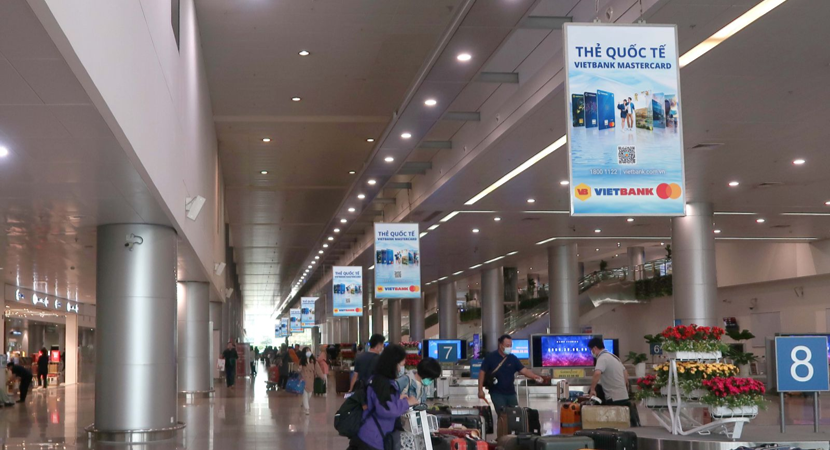
Ho Chi Minh City represents a major commercial and business market, with Tan Son Nhat International Airport attracting a strong mix of business, commercial, and international audiences.
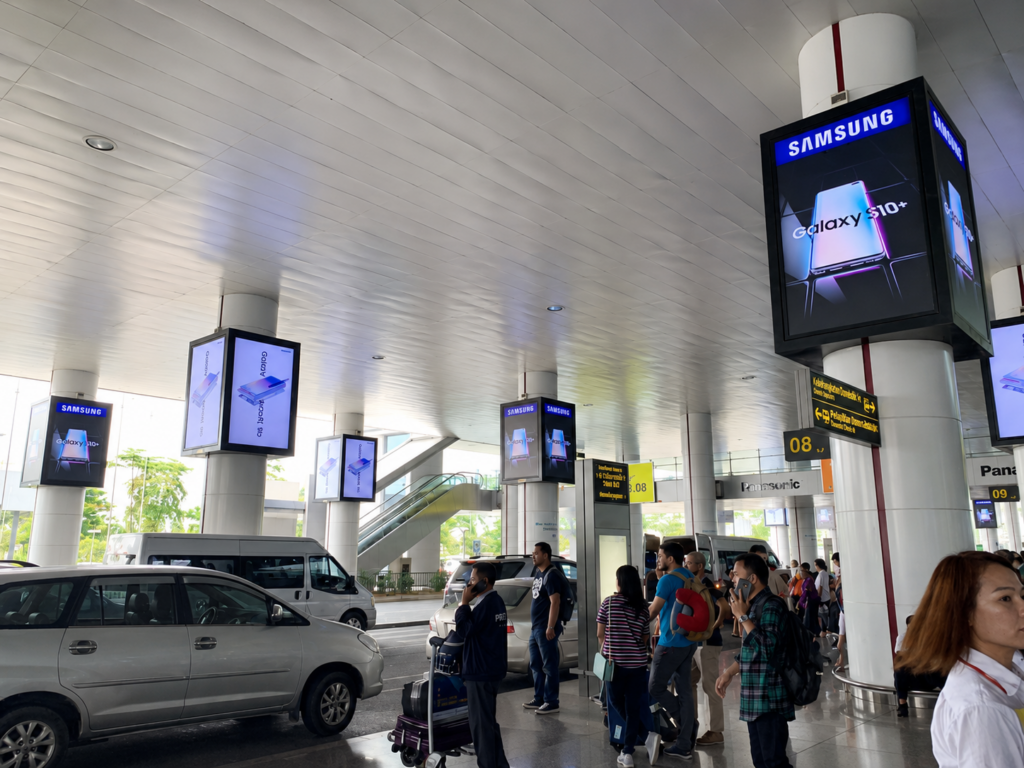
Hanoi represents a different market, with Noi Bai International Airport serving government, diplomatic, educational, and corporate travel segments.
Audience composition should influence airport selection as much as passenger volume. While passenger traffic provides an indication of potential reach, the airport’s location and traveller profile should also align with the brand’s target audience and campaign objectives.
How tourism gateways and business gateways play different roles
Tourism gateways may be more suitable for hospitality, travel, and lifestyle brands, particularly when campaigns are focused on leisure travellers and tourism-related audiences.
Business gateways can provide stronger opportunities for finance, technology, education, and B2B companies targeting professionals, investors, and corporate travellers.
The best airport strategy depends on audience alignment, geographic priorities, and campaign objectives rather than airport size alone.
With these factors in mind, brands can evaluate Vietnam’s major and emerging airports based on their passenger reach, traveller profiles, geographic markets, and international connectivity.
Vietnam's Major and Emerging Airports for Advertising
Vietnam’s major airports serve different traveller profiles and geographic markets, while emerging tourism gateways such as Da Nang, Cam Ranh and Phu Quoc are becoming increasingly relevant as international connectivity grows.
Tan Son Nhat International Airport (SGN), Ho Chi Minh City
Located in Ho Chi Minh City, this is the busiest and largest airport in Vietnam. Despite being located just 7 kilometers (4 miles) from the city center, it frequently operates past its designed capacity. The airport’s strategic location in Vietnam’s largest commercial centre makes it particularly relevant for brands targeting business travellers, international visitors, and high-value consumers. [1, 2, 3, 4]
Noi Bai International Airport (HAN), Hanoi
Serving the capital city of Hanoi, this airport is located about 35 kilometers (22 miles) north of the city center. In the 2026 World Airport Awards, Noi Bai ranked 71st among the world’s Top 100 Airports and entered the global Top 10 in the 30–40 million passenger category for the first time. As an important international gateway to Hanoi and northern Vietnam, Noi Bai serves domestic and international travellers, including business, government, diplomatic, and tourism audiences. [1, 2, 3, 4, 5]
Da Nang International Airport (DAD), Da Nang
Located approximately 3 kilometers from the city centre, Da Nang International Airport (DAD) is the country’s third-largest airport and a key gateway to Central Vietnam’s beach resorts and heritage destinations such as Hoi An. Its International Terminal (T2) has received a 5-Star Skytrax rating for its passenger facilities and service, while automated check-in, baggage drop, immigration, and boarding processes support a seamless traveller experience. The airport serves both domestic and international travellers, including leisure tourists visiting Da Nang, Hoi An, and other destinations across Central Vietnam, as well as business travellers accessing the region’s commercial and tourism hubs. [1, 2, 3]
Cam Ranh International Airport (CXR), Nha Trang
Located approximately 30 kilometers south of Nha Trang, Cam Ranh serves the wider south-central coastal area and caters to both domestic and international flights, making it an important gateway for international leisure travellers. Scoot launched direct Singapore–Cam Ranh services on 21 November 2025, initially operating twice weekly with plans to increase to five flights per week from Q1 2026. This growing international connectivity makes Cam Ranh airport particularly relevant for hospitality, travel, luxury, retail, and lifestyle campaigns. [1, 2]
Phu Quoc International Airport (PQC), Phu Quoc
Serving one of Vietnam’s major island tourism destinations since 2012, this airport is particularly relevant for brands targeting international leisure and tourism audiences. Scoot launched direct Singapore–Phu Quoc services on 20 December 2024, initially operating three flights per week before increasing to five weekly services from 25 January 2025. The growing international connectivity supports Phu Quoc’s role as an international tourism gateway and creates opportunities for hospitality, travel, luxury, retail, and lifestyle brands. [1, 2, 3]
Passenger volume provides an important indication of the potential reach available through airport media. The chart below compares 2025 passenger traffic across these five key Vietnamese airports.
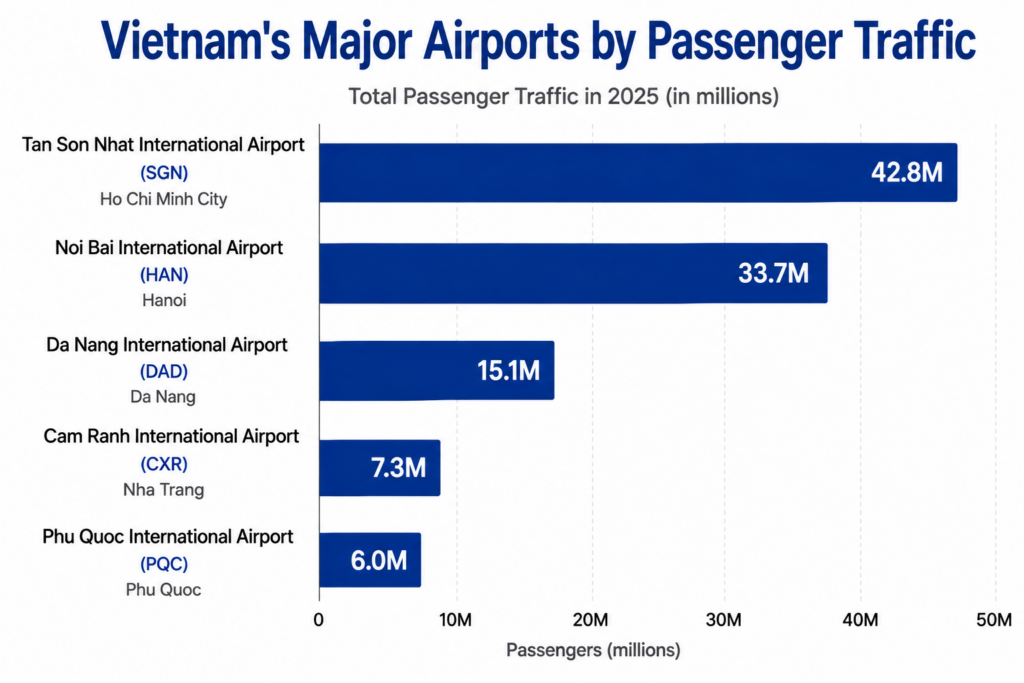
Source: 2025 passenger traffic data from MBS Research for Tan Son Nhat and Noi Bai; Vietnam Government News for Da Nang; Khanh Hoa Provincial Government for Cam Ranh; and International Airport Review for Phu Quoc. Figures are rounded to the nearest 0.1 million.
These figures provide useful context when comparing potential airport reach, but passenger volume should be considered alongside audience profile, geographic catchment, travel behaviour, and campaign objectives.
What Advertisers Should Clarify Before Buying Vietnam Airport Media
Airport advertising works best when media planning is aligned with business objectives.
How campaign objective, audience type, and travel profile should shape the media plan
Before investing, advertisers should define:
- Campaign goals
- Target audience
- Domestic versus international focus
- Business versus leisure travellers
- Geographic priorities
- Campaign duration
These factors influence both airport selection and format choice, helping brands identify the locations and media formats that best match their campaign objectives.
Why one airport site is not the same as a network strategy
A single premium location can deliver strong visibility within a specific airport and audience catchment.
However, brands seeking broader geographic coverage may benefit from a multi-airport strategy that extends reach across different cities, traveller profiles, and key markets.
The right approach depends on whether the campaign prioritises depth in one market or broader coverage across multiple markets.
FAQ: Vietnam Airport Advertising
What is Vietnam airport advertising?
Airport advertising refers to media placements located within airports, including digital screens, static displays, baggage claim media, arrival hall advertising, departure-area advertising, and experiential activations.
Why do brands advertise in airports in Vietnam?
Brands use airport advertising to reach high-value audiences in premium environments where travellers have opportunities to notice and engage with brand messages during their journey.
Which industries benefit most from airport advertising in Vietnam?
Luxury, hospitality, tourism, finance, education, telecommunications, technology, and other brands targeting international travellers, business professionals, and affluent consumers can benefit from airport media.
Is airport advertising in Vietnam better for awareness or conversion?
Airport advertising can support both brand awareness and conversion. Large-format and static placements can build visibility and brand presence, while digital and interactive formats can support QR code engagement, app downloads, promotional offers, and lead generation.
How do I choose the right airport in Vietnam for advertising?
Airport selection should be based on audience profile, passenger volume, geographic catchment, campaign objective, and travel behaviour rather than passenger volume alone.
Vietnam’s major and emerging airports serve different audiences and markets, so brands can consider airports such as Tan Son Nhat International Airport, Ho Chi Minh City; Noi Bai International Airport, Hanoi; Da Nang International Airport, Da Nang; Cam Ranh International Airport, Nha Trang; and Phu Quoc International Airport, Phu Quoc based on their campaign objectives.
Start Your Airport Advertising Campaign in Vietnam
Vietnam offers brands a wide range of airport advertising opportunities, from high-impact placements in major international gateways to digital screens, arrival hall media, baggage claim advertising, and other formats across key airports. With the right combination of locations and formats, brands can reach international travellers, domestic passengers, business professionals, and tourism audiences at important moments throughout their journey.
Whether you’re planning a product launch, market entry, retail promotion, or long-term brand awareness campaign, The Perfect Media can help you identify suitable airport media in Vietnam and develop a strategy aligned with your campaign goals, target audience, and geographic priorities.
Ready to advertise in Vietnam? Contact TPM today to explore available airport media locations and create an airport advertising campaign that delivers strong visibility and reaches the right audience.